---
title: "Powering the Future: How Energy Harvesting and LoRaWAN® Enable Battery-Free AI Vision"
description: Discover LoRaWAN® — a low-power, long-range wireless standard enabling global IoT networks. Learn its benefits, use cases, and why adoption is accelerating.
image: https://blog.lora-alliance.org/hubfs/5-1-1024x1024-1.png
---
[](https://lora-alliance.org/)
- [LoRa Alliance®](https://lora-alliance.org/)
- LoRaWAN®
- [Certification](https://lora-alliance.org/lorawan-certification/)
- Membership
- [Products & Services](https://lora-alliance.org/showcase/)
- [Resources](https://resources.lora-alliance.org/)
### Topics
- Select a Topic
[LoRaWAN®](https://blog.lora-alliance.org/tag/lorawan) [LoRa Alliance®](https://blog.lora-alliance.org/tag/lora-alliance) [Energy Harvesting](https://blog.lora-alliance.org/tag/energy-harvesting) [AI](https://blog.lora-alliance.org/tag/ai)
# Powering the Future: How Energy Harvesting and LoRaWAN® Enable Battery-Free AI Vision
By [Dracula & Semtech](https://blog.lora-alliance.org/author/dracula-semtech) on February, 6 2026
[mailto:?body=https://blog.lora-alliance.org/powering-the-future-how-energy-harvesting-and-lorawan-enable-battery-free-ai-vision](mailto:?body=https://blog.lora-alliance.org/powering-the-future-how-energy-harvesting-and-lorawan-enable-battery-free-ai-vision)

#### **Powering the Future: How Energy Harvesting and LoRaWAN® Enable Battery-Free AI Vision**
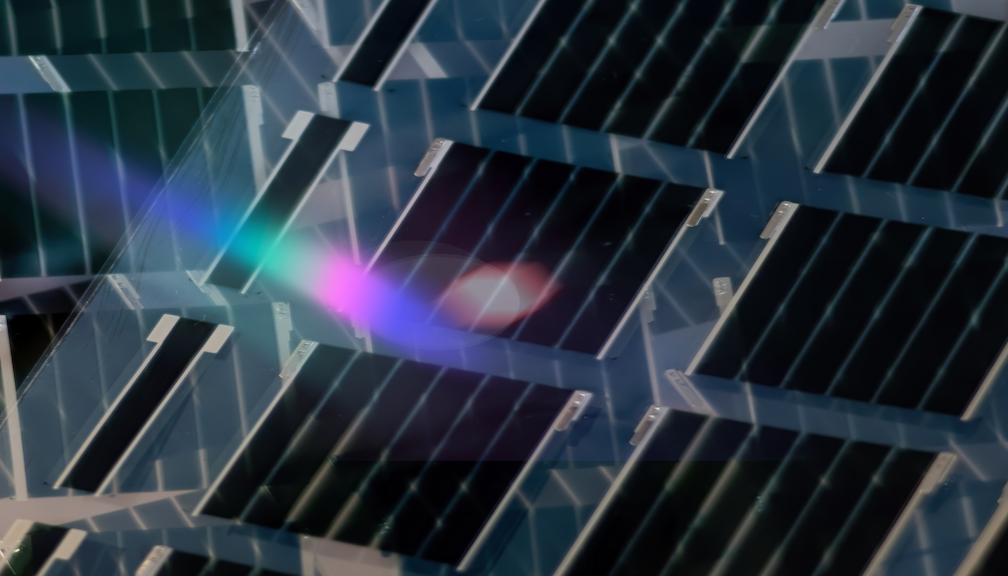
At CES 2026, visitors witnessed a breakthrough in sustainable IoT: the world's first battery-free AI vision device, powered entirely by indoor light and connected via LoRaWAN. The demonstration, developed by [Dracula Technologies](https://dracula-technologies.com/) in collaboration with ASYGN and [Semtech](https://www.semtech.fr/), illustrates how the LoRaWAN ecosystem enables entirely new categories of maintenance-free IoT applications.
**The Battery Problem in IoT Deployment**
Traditional IoT devices face a practical ceiling on scalability. Battery replacement in large deployments becomes prohibitively expensive, particularly for sensors in hard-to-reach locations. Environmental concerns about battery disposal add regulatory pressure, while the batteries themselves often represent the bulkiest component in compact sensor designs.
For AI-enabled vision applications, the power challenge intensifies. Image capture and on-device processing demand significantly more energy than simple environmental sensing, traditionally making battery-free operation impossible for anything beyond the most basic sensors.
**Energy Harvesting Meets Edge AI and LoRaWAN**
The CES demonstration brought together three complementary technologies to solve this challenge. Dracula Technologies' LAYER organic photovoltaic technology harvests energy from ambient indoor light. ASYGN's edge AI processing platform performs image analysis locally on the device, dramatically reducing power consumption by transmitting only relevant data insights rather than raw images. Semtech's LoRa® technology provides the low-power, long-range wireless connectivity that makes battery-free operation viable.
This collaboration demonstrates how the LoRaWAN ecosystem enables innovation through partnerships. Each company contributes its specialized expertise—energy harvesting, edge intelligence, and efficient connectivity—to create a solution none could deliver independently.
**Why LoRaWAN for Battery-Free Vision**
LoRaWAN's low-power, long-range characteristics make it essential for energy-harvested devices. The protocol's deep sleep modes and efficient uplink design allow devices to operate on the minimal power budgets available from harvested energy sources.
Unlike Wi-Fi or cellular connections that require constant network handshakes and higher transmission power, LoRaWAN devices can sleep for extended periods and wake only to transmit condensed data packets. For an AI vision device that processes images locally and sends only detection events or alerts, this architecture perfectly aligns power consumption with available harvested energy.
The long-range capability of LoRaWAN also reduces infrastructure requirements. A single gateway can cover an entire building or campus, eliminating the need for dense access point networks required by short-range protocols.
**Real-WorldApplications Unlocked**
This combination of energy harvesting, edge AI, and LoRaWAN connectivity unlocks deployment scenarios previously impractical or impossible:
- **Workplace optimization** sensors can monitor desk occupancy and space utilization without installation complexity or maintenance schedules. Building managers gain real-time insights into how spaces are used without worrying about battery replacement across hundreds or thousands of sensors.
- **Retail analytics** applications can track customer traffic patterns and dwell times in areas where power access is limited. Store layouts can be optimized based on actual behavior data rather than assumptions.
- **Industrial monitoring** in manufacturing environments can identify anomalies or safety concerns in locations where running power lines would be prohibitively expensive. Vision-based quality control becomes feasible in previously unmonitored production areas.
- **Healthcare facilities** can deploy patient monitoring and workflow optimization sensors without infection control concerns associated with battery replacement procedures in sterile environments.
**The Ecosystem Advantage**
The Dracula Technologies demonstration showcases the strength of the LoRaWAN ecosystem. By providing a standardized, open connectivity protocol, LoRaWAN enables partnerships between specialized technology providers. Energy harvesting companies, AI processing innovators, and sensor manufacturers can combine their solutions confidently, knowing the connectivity layer will support their power and range requirements.
This ecosystem approach accelerates innovation by allowing each partner to focus on their core expertise while leveraging proven connectivity infrastructure.
**The Path Forward**
By removing the battery constraint, designers can focus on optimizing for the application rather than power management. LoRaWAN's efficiency and range characteristics directly enable the battery-free vision use case by ensuring that harvested energy budgets remain viable even with wireless connectivity requirements.
As energy harvesting technologies continue improving and edge AI processing becomes more efficient, this approach will expand beyond vision applications. The combination of ambient energy sources, efficient edge processing, and low-power wide-area connectivity creates a foundation for truly sustainable, maintenance-free IoT deployments at scale.
The future of IoT isn't just wireless—it's battery-free.
--
Interested in becoming a guest blogger for the LoRa Alliance®? Please contact [marketing@lora-alliance.com](mailto:marketing@lora-alliance.com)with your blog idea and draft.
###### About The Author
[More from this author](https://blog.lora-alliance.org/author/dracula-semtech)
###### Dracula & Semtech
Dracula Technologies, headquartered in Valence, France, pioneers sustainable energy solutions with its LAYER® technology, revolutionizing power sources for low-power electronics. Its organic photovoltaic (OPV) modules, manufactured using patented digital printing, harvest ambient light, eliminating reliance on traditional batteries. Semtech Corporation is a provider of high-performance semiconductors, IoT systems, and cloud connectivity services, specializing in delivering high-quality technology solutions that contribute to a smarter, more connected, and more sustainable world.
#### Recommended Articles
[.png)](https://blog.lora-alliance.org/no-wires-no-waste-what-the-water-in-india-conference-revealed-about-lorawans-critical-role-in-indias-water-crisis)
###### [No Wires, No Waste: What the 'Water in India' Conference Revealed About LoRaWAN's Critical Role in India's Water Crisis](https://blog.lora-alliance.org/no-wires-no-waste-what-the-water-in-india-conference-revealed-about-lorawans-critical-role-in-indias-water-crisis)
- August 19, 2026
[](https://blog.lora-alliance.org/understanding-and-improving-your-lorawan-coverage)
###### [Understanding and Improving Your LoRaWAN® Coverage](https://blog.lora-alliance.org/understanding-and-improving-your-lorawan-coverage)
- August 6, 2026
[](https://blog.lora-alliance.org/how-ai-powered-zone-level-tracking-captured-attention-at-mwc)
###### [How AI-Powered Zone-Level Tracking Captured Attention at MWC](https://blog.lora-alliance.org/how-ai-powered-zone-level-tracking-captured-attention-at-mwc)
- March 26, 2026
#### Recommended Articles
#### Recommended Articles
#### Recommended Articles
Search Article
### Popular Posts
### Recent Post
### Recent Posts
[No Wires, No Waste: What the 'Water in India' Conference Revealed About LoRaWAN's Critical Role in India's Water Crisis](https://blog.lora-alliance.org/no-wires-no-waste-what-the-water-in-india-conference-revealed-about-lorawans-critical-role-in-indias-water-crisis)
- 6 February, 2026
[Understanding and Improving Your LoRaWAN® Coverage](https://blog.lora-alliance.org/understanding-and-improving-your-lorawan-coverage)
- 6 February, 2026
[How AI-Powered Zone-Level Tracking Captured Attention at MWC](https://blog.lora-alliance.org/how-ai-powered-zone-level-tracking-captured-attention-at-mwc)
- 6 February, 2026
[Powering the Future: How Energy Harvesting and LoRaWAN® Enable Battery-Free AI Vision](https://blog.lora-alliance.org/powering-the-future-how-energy-harvesting-and-lorawan-enable-battery-free-ai-vision)
- 6 February, 2026
[LoRaWAN® Takes Center Stage at Salon des Maires 2025: A Milestone for Connected Territories in France](https://blog.lora-alliance.org/lorawan-takes-center-stage-at-salon-des-maires-2025)
- 6 February, 2026
###### ABOUT THE ORGANIZATION
### LoRa Alliance®
The LoRa Alliance® is an open, non-profit association with the mission to support and promote the global adoption of the LoRaWAN® standard, the leading LPWAN.
-
-
-
-
### Topics
- [LoRaWAN® (23)](https://blog.lora-alliance.org/tag/lorawan)
- [LPWAN (13)](https://blog.lora-alliance.org/tag/lpwan)
- [IoT (12)](https://blog.lora-alliance.org/tag/iot)
- [LoRa Alliance® (11)](https://blog.lora-alliance.org/tag/lora-alliance)
- [Guest Blog (10)](https://blog.lora-alliance.org/tag/guest-blog)
- [Article (5)](https://blog.lora-alliance.org/tag/article)
- [Smart Cities (4)](https://blog.lora-alliance.org/tag/smart-cities)
- [Energy Harvesting (3)](https://blog.lora-alliance.org/tag/energy-harvesting)
- [Security (3)](https://blog.lora-alliance.org/tag/security)
- [AI (2)](https://blog.lora-alliance.org/tag/ai)
- [Analytics (2)](https://blog.lora-alliance.org/tag/analytics)
- [Benefits (2)](https://blog.lora-alliance.org/tag/benefits)
- [Blog (2)](https://blog.lora-alliance.org/tag/blog)
- [LoRaWAN World Expo (2)](https://blog.lora-alliance.org/tag/lorawan-world-expo)
- [Member Benefits (2)](https://blog.lora-alliance.org/tag/member-benefits)
- [Membership (2)](https://blog.lora-alliance.org/tag/membership)
- [People & Planet (2)](https://blog.lora-alliance.org/tag/people-planet)
- [Semtech (2)](https://blog.lora-alliance.org/tag/semtech)
- [Smart Agriculture (2)](https://blog.lora-alliance.org/tag/smart-agriculture)
- [Smart Buildings (2)](https://blog.lora-alliance.org/tag/smart-buildings)
- [Sustainability (2)](https://blog.lora-alliance.org/tag/sustainability)
- [press release (2)](https://blog.lora-alliance.org/tag/press-release)
- [technical release (2)](https://blog.lora-alliance.org/tag/technical-release)
- [A2A Smart City (1)](https://blog.lora-alliance.org/tag/a2a-smart-city)
- [Actility (1)](https://blog.lora-alliance.org/tag/actility)
- [Analyst (1)](https://blog.lora-alliance.org/tag/analyst)
- [Approved Standard (1)](https://blog.lora-alliance.org/tag/approved-standard)
- [BlueTooth (1)](https://blog.lora-alliance.org/tag/bluetooth)
- [Browan Communications (1)](https://blog.lora-alliance.org/tag/browan-communications)
- [Certification (1)](https://blog.lora-alliance.org/tag/certification)
- [Coverage (1)](https://blog.lora-alliance.org/tag/coverage)
- [Dryad (1)](https://blog.lora-alliance.org/tag/dryad)
- [EU (1)](https://blog.lora-alliance.org/tag/eu)
- [Europe (1)](https://blog.lora-alliance.org/tag/europe)
- [Everynet (1)](https://blog.lora-alliance.org/tag/everynet)
- [FUOTA (1)](https://blog.lora-alliance.org/tag/fuota)
- [India (1)](https://blog.lora-alliance.org/tag/india)
- [IoT Ventures (1)](https://blog.lora-alliance.org/tag/iot-ventures)
- [Israel (1)](https://blog.lora-alliance.org/tag/israel)
- [Italy (1)](https://blog.lora-alliance.org/tag/italy)
- [LCTT (1)](https://blog.lora-alliance.org/tag/lctt)
- [LoRa Alliance Membership (1)](https://blog.lora-alliance.org/tag/lora-alliance-membership)
- [LoRaWAN CertifiedCM (1)](https://blog.lora-alliance.org/tag/lorawan-certifiedcm)
- [LoRaWAN End Device (1)](https://blog.lora-alliance.org/tag/lorawan-end-device)
- [LoRaWAN Live (1)](https://blog.lora-alliance.org/tag/lorawan-live)
- [Massive Deployments (1)](https://blog.lora-alliance.org/tag/massive-deployments)
- [Membership Information (1)](https://blog.lora-alliance.org/tag/membership-information)
- [Middle East (1)](https://blog.lora-alliance.org/tag/middle-east)
- [Minol Zenner Group (1)](https://blog.lora-alliance.org/tag/minol-zenner-group)
- [Netmore (1)](https://blog.lora-alliance.org/tag/netmore)
- [Network Flexibility (1)](https://blog.lora-alliance.org/tag/network-flexibility)
- [SenRa (1)](https://blog.lora-alliance.org/tag/senra)
- [Smart Utilities (1)](https://blog.lora-alliance.org/tag/smart-utilities)
- [Smart Water (1)](https://blog.lora-alliance.org/tag/smart-water)
- [Unidata (1)](https://blog.lora-alliance.org/tag/unidata)
- [Utilities (1)](https://blog.lora-alliance.org/tag/utilities)
- [Wi-Fi (1)](https://blog.lora-alliance.org/tag/wi-fi)
- [ZENNER (1)](https://blog.lora-alliance.org/tag/zenner)
- [asset tracking (1)](https://blog.lora-alliance.org/tag/asset-tracking)
- [bui (1)](https://blog.lora-alliance.org/tag/bui)
- [safety (1)](https://blog.lora-alliance.org/tag/safety)
- [scale (1)](https://blog.lora-alliance.org/tag/scale)
- [smart industry (1)](https://blog.lora-alliance.org/tag/smart-industry)
see all

LoRa Alliance®
39221 Paseo Padre Pkwy, Suite J
Fremont, CA 94538
Important Links
- [Home](https://lora-alliance.org/)
- [LoRaWAN®](https://lora-alliance.org/about-lorawan/)
- [Certification](https://lora-alliance.org/lorawan-certification/)
- [Membership](https://lora-alliance.org/become-a-member/)
- [Products](https://lora-alliance.org/showcase/)
- [Resources](https://resources.lora-alliance.org/)

[+1 510-492-4044](tel:+15104924044)

[admin@lora-alliance.org](mailto:admin@lora-alliance.org)

LoRa Alliance®
39221 Paseo Padre Pkwy, Suite J
Fremont, CA 94538
Copyright © 2022 LoRa Alliance® | [Terms of Use](https://lora-alliance.org/terms-of-use/) | [Privacy & Cookie Policy](https://lora-alliance.org/privacy-policy/)
-
-
-